Hair Restoration
Serving patients in: Paramus, Wyckoff, Ridgewood, Allendale, Woodcliff Lake, Montvale, Saddle River, Upper Saddle River, Westwood, Ho Ho Kus, Park Ridge, Rivervale, Old Tappan, and surrounding areas.

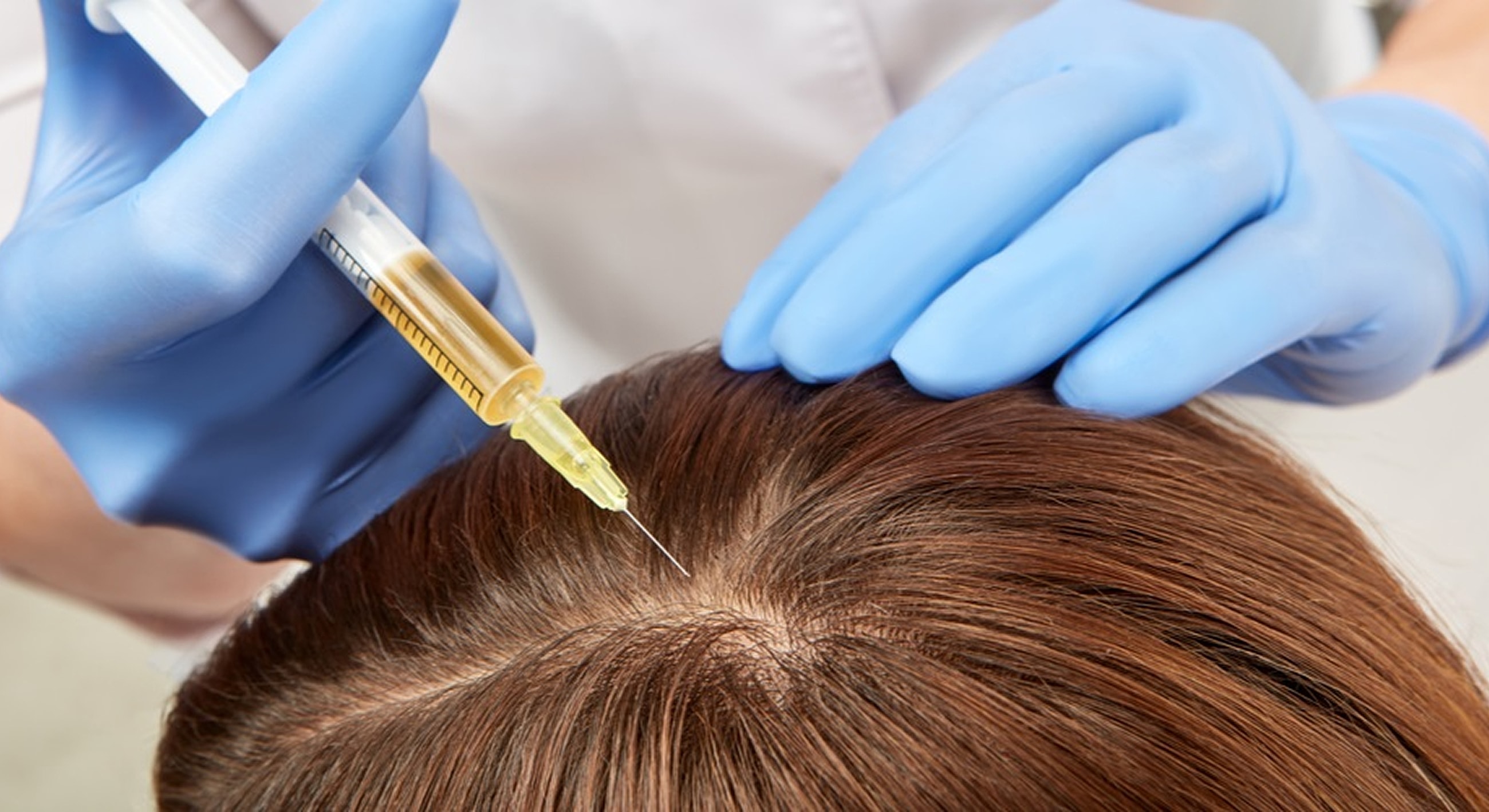
The Breslow Center in Paramus, New Jersey offers PRP (Platelet-Rich Plasma) hair restoration for both women and men suffering from hair loss or thinning. PRP is a powerful non-surgical treatment for the scalp that harnesses the power of growth factor-rich proteins in your own blood to stimulate natural hair growth.
Hair thinning can develop gradually, which makes early changes in density or fullness easy to overlook. PRP hair restoration offers an option for patients who still have active hair follicles and want to support fuller, healthier-looking growth without surgery.
In PRP hair restoration therapy, growth factors and other beneficial cells found in the patient’s own blood are reintroduced into the scalp via injection to promote hair regrowth where hair has been lost or is thinning.
First, the patient’s blood is drawn. It is then put through a centrifuge system to collect the Platelet-Rich Plasma (PRP). PRP is very highly concentrated blood plasma that contains a very high amount of growth factors derived from the platelets as well as bioactive proteins that all work together to help stimulate hair growth. The PRP is then put into a syringe and injected into the areas of thinning or hair loss.
Because PRP comes from your own blood, treatment uses naturally occurring platelets and growth factors rather than introducing a synthetic substance into the scalp. The injections are placed strategically throughout areas of thinning based on your individual pattern of hair loss.

Hair restoration can be especially appealing for patients looking for a nonsurgical treatment that fits easily into their routine. There is little interruption to daily activities, and treatment can be incorporated into a broader hair restoration plan when additional support is appropriate. Hair restoration treatments:
Together, these growth factors support cellular activity within the treated scalp and are part of the reason PRP has become an established option for patients experiencing certain forms of hair thinning. Response varies from person to person, so treatment is planned as a series rather than a single session.
PRP therapy for our Paramus hair restoration is initially performed as a series of four treatments, spaced one month apart. After completing a series of four treatments, maintenance is recommended with one treatment every 3-4 months.
Hair grows in cycles, so improvement develops gradually throughout the treatment series. Staying consistent with the recommended schedule gives the follicles time to respond, while ongoing maintenance can help support the progress achieved during the initial treatments.

Men and women experiencing symptoms of hair loss or thinning may benefit from this procedure. The best candidates for hair restoration in Paramus are those that who do not have a history of telogen effluvium, alopecia areata, traction alopecia or scarring alopecia.
PRP tends to be most useful when hair is thinning and the follicles are still capable of producing hair. Your consultation also provides an opportunity to review the pattern and extent of your hair loss and determine whether PRP, laser therapy, or a combination approach makes the most sense for you.
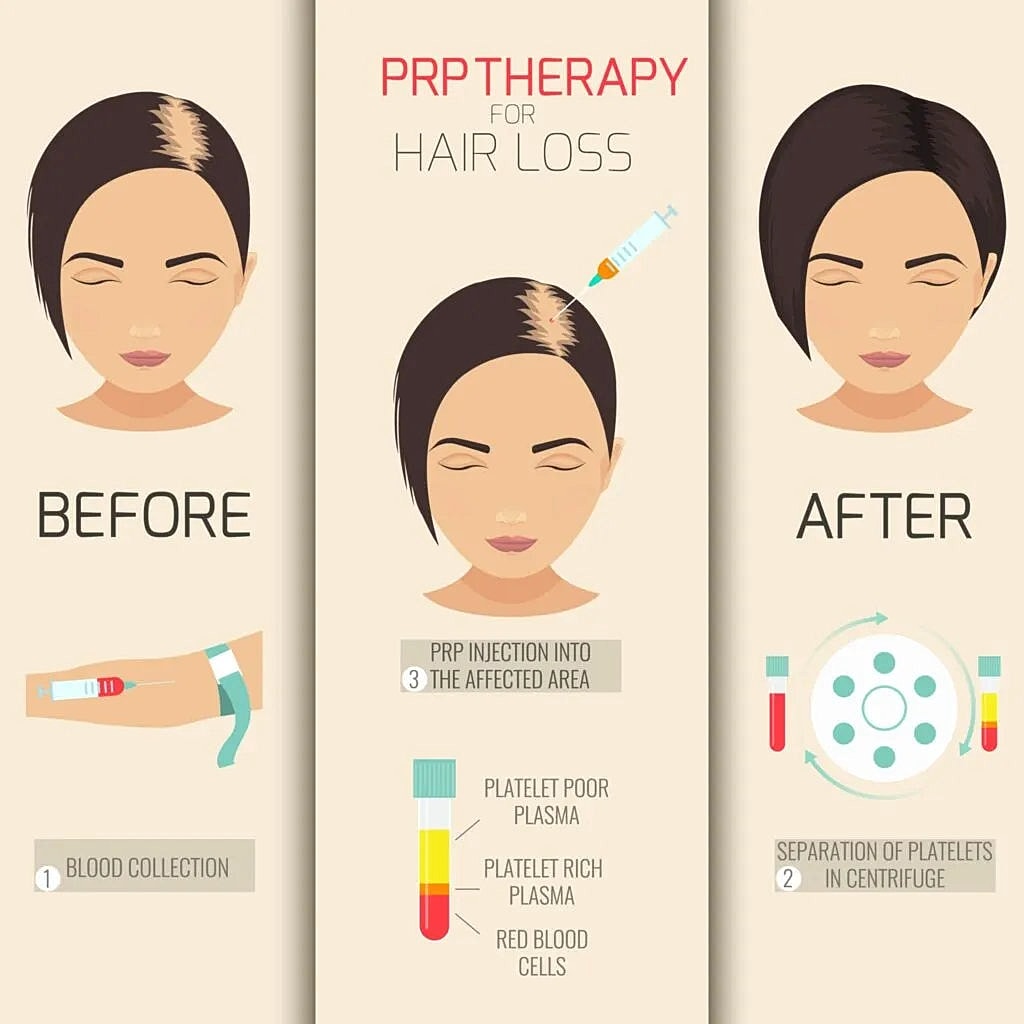
Results from PRP therapy vary and are typically seen within six months of the first treatment.
Results from PRP are best seen on patients who have hair thinning, but not completely bald spots on their head. It is important to understand that hair restoration results will vary and there is never a guarantee of success.
A multi-therapy regimen for optimal results may also include nutritional supplementation and laser therapy.
Changes usually appear progressively rather than all at once. Patients may first notice less shedding or improvements in hair quality before increased thickness or density becomes more apparent.
Maintaining realistic expectations is important. PRP can support existing follicles, but the degree of improvement depends on factors such as the cause of hair loss, how long thinning has been present, and individual response to treatment.



With hair restoration Paramus patients should know that it costs between $800 and $1,200 per treatment.
Your overall treatment cost will depend on the number of sessions recommended and whether PRP is combined with other hair restoration therapies. A personalized plan and expected treatment schedule can be reviewed during your consultation.
If you would like more information about PRP hair restoration, call our Paramus, New Jersey office at (201) 444-9522 today!
Most patients describe the injections as brief pinching, pressure, or tenderness across the scalp. Any discomfort generally lasts only during treatment and improves quickly afterward.
PRP typically requires little to no downtime, and most patients can return to their usual activities soon after treatment. Mild scalp tenderness or redness may occur temporarily.
Hair growth is gradual, so results take time to develop. Many patients begin noticing changes within several months, with improvement continuing as they progress through their treatment series.
Yes. PRP hair restoration can be used for both men and women experiencing appropriate types of hair thinning or hair loss.
PRP is generally better suited to areas where hair is thinning and follicles remain active. Completely bald areas may respond less predictably, which is why an evaluation of your hair loss pattern is important before treatment.
PRP does not permanently stop the processes responsible for hair loss. Maintenance treatments are typically recommended to help support hair density and preserve results over time.
Yes. Some patients use PRP together with LaserCap therapy and nutritional support as part of a more comprehensive approach to hair restoration. Your treatment plan can be tailored to your specific pattern of thinning and goals.

© The Breslow Center Paramus, NJ | All Rights Reserved | Sitemap | Privacy Policy | Accessibility | Notice of Open Payment Database